タグ: glue

  • Box making with “nikawa” glue

    Box making with “nikawa” glue

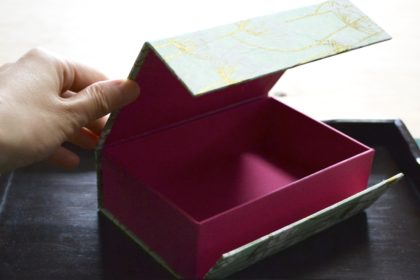
    A box of making with “nikawa” glue.
    Outside paper is Nepalese handmade paper called Lokta paper.
    The pink paper inside is Tanto, a Japanese industrial paper.
    膠で作った箱。
    外側はネパールの手漉き紙、ロクタペーパー。
    ピンクの内側の紙は日本の工業紙のタント。

    The update had stopped for a while.
    Because I had making my workspace.
    Finally it was finished.
    This should make my work go smoothly.

    Now, my challenge in July is to use “nikawa” glue.
    I got it from my kindly friend.
    I’m happy to have many good friends.

    しばらく更新が止まっていました。
    作業場を作っていたのです。
    やっとそれが完成しました。
    これで、作業効率が良くなるはず。

    さて、7月の試みは”膠(ニカワ)”を使うことでした。
    親切な友人がプレゼントしてくれたのです。
    良い友人達に恵まれて、私は幸せです。

    Box&Needle’s label.
    ボックス&ニードルのラベル。

    What I received was a glue from a store called Box & Needle in Kyoto.
    This is a Long-established carton store.
    This Haribaco making kit is also a product of Box & Needle.
    Both are traditional boxes made by sticking paper on cardboard,
    but the method of making is different between Cartonnage in France and “Haribako” in Japan.
    The biggest difference is the place of spread glue.
    In Cartonnage, glue is applied to cardboard, and in Haribako, glue is applied to the paper.
    Now, let’s make a Haribako using glue!

    私がいただいたのは京都にあるBox&Needleというお店の膠です。
    こちらは老舗の貼箱のお店。
    この貼箱制作キットもBox&Needleのものです。
    どちらも厚紙に紙を貼って作る伝統的な箱ですが、
    フランスのカルトナージュと日本の”貼箱(ハリバコ)”では作り方が異なるそうです。
    最大の違いは糊を塗る場所です。
    カルトナージュでは厚紙に糊を塗り、貼箱では紙の方に糊を塗ります。
    それでは、膠を使って貼箱を作ってみます!

    Vacuum packing of glue.
    I cut the glue together with the pack.
    I expected it to be sticky, but it’s not.
    真空パックされた膠。
    パックごと膠を切りました。
    べとつくことを予想していましたが、そうでもない。
    The cross section of glue.
    It was easy to get out of the pack.
    Not sticky.
    膠の断面。
    パックから簡単に出せました。
    べとつかない。
    It’s hard elastic.
    It isn’t sticky.
    硬めの弾力があります。
    べとつきはしません。
    Cut into bite-sized pieces.
    一口大にカット。

    First, I follow the manual.
    Cut into small pieces to melt the glue quickly.
    It says bite-sized, so I do that.
    I write that it is not sticky, but I expected the nikawa to be sticky.
    Because it’s glue. I thought the glue was sticky.


    まずは説明書のとおりにいきます。
    膠を素早く溶かすために小さく切ります。
    一口大と書いてあるので、そのとおりに。
    しつこくベトベトしないと書いていますが、膠がべとつくことを予想していたのです。
    だって糊ですからね、糊はべとつくものだと思い込んでいました。

    Add water.
    水を加えます。

    Add a quarter of the amount of water in the nikawa.
    It is easy to burn, so put it in a container and boil it in hot water.

    膠の1/4の量の水を加えます。
    膠は焦げやすいので、容器に入れ湯煎にかけます。


    It begins to melt soon.
    すぐに溶けはじめました。
    It’s a small change, but I’ll post a photo for my record.
    小さな変化ですが、記録のために載せておきます。
    When the solid becomes smaller, mix it with a brush to make it completely liquid.
    固形が小さくなったら、刷毛で混ぜ、完全に液体にします。
    The nikawa is ready.
    Oh, This is nikawa.
    膠の準備ができました。
    これが膠なんですねぇ。

    At this time, I moved from the kitchen to the workshop.
    next stage is a making a box.
    But…

    この段階で、台所から作業場へ移動しました。
    次は箱を作ります。
    ところが…

    The glue has already begun to solidify.
    膠がすでに固まりはじめていました。
    This needs to be melted again.
    これはもう一度溶かすしかないですね。
    Try to keep it warm to keep it melted.
    溶けた状態を維持するため、保温してみました。

    I couldn’t take a picture of the paper pasting work.
    Because it was a battle against time.
    When I lifted the brush and the temperature, it began to harden.
    When I think later, I should have increased the water.

    紙を貼る作業の写真は撮れませんでした。
    時間との戦いだったからです。
    刷毛を持ち上げ温度が下がると、固まりはじめました。
    後から考えると、水を増やせばよかったのでしょう。

    Since it hardened during gluing, the glue was unevenly attached.
    The paper became uneven.

    糊づけの最中に硬化が始まったため、糊が不均一につきました。
    そのため、紙が凸凹しています。
    I managed to finish making the box.
    なんとか箱作りは終了。
    Wrap and store the remaining glue.
    残りの膠は包んで保存します。

    Glue is peeled off by heat and moisture.
    The instructions said that you could re-paste it with steam.
    I tried it.
    But, the paper didn’t peel of.
    The nikawa is strong.
    It’s a good idea to add more water to slow down the cure.
    I’ll try again.

    膠は熱と水分で剥がれます。
    説明書にはスチームで紙を剥がすことができると書かれていました。
    試してみましたが、紙を剥がすことはできませんでした。
    膠は強力な糊でした。
    硬化を遅くするためにもっと水分を加えると良いのでしょうね。
    また挑戦するつもりです。

  • Bookbinding in the tea room

    Bookbinding in the tea room

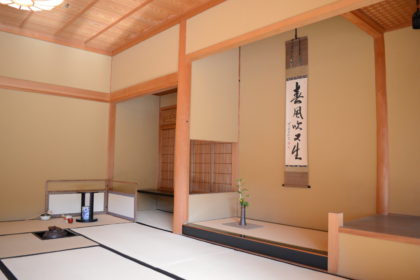
    This is a room for the tea ceremony at “Ashiyagama no Sato” in Fukuoka Prefecture.
    Tea ceremony tools are on display.
    こちらは福岡県の“芦屋釜の里”の茶室。
    茶道具が展示されています。

    I went to “Ashiyagama no Sato” in Onga-gun, Fukuoka prefecture.
    To see an independent exhibition of an imoji.
    An “imoji” is a craftsman who casts with molten iron.
    “Ashiyagama no Sato is studying and making kettles used in the tea ceremony and temple bells.
    福岡県遠賀郡にある “芦屋釜の里” へ行ってきました。
    ある鋳物師(いもじ)の独立展を観るためにです。
    鋳物師とは溶かした鉄で鋳造する職人のことです。
    芦屋釜の里では茶釜や梵鐘を作ったり、研究したりしています。

    Yousuke Higuchi, an imoji.
    He will independent this spring.
    鋳物師の樋口陽介氏。この春に独立されます。

    I’d really like to tell about Ashiyagama teakettles, but I don’t have enough knowledge yet.
    I will tell you after studying more about it.
    This time, I will tell about “hyougu”, Hanging scrolls, folding screens, sliding doors, etc.
    芦屋釜についてお話ししたいのはやまやまなのですが、まだ知識が足りません。
    もっと学んでからお伝えしたいと思います。
    今回は、“表具”、つまり掛軸、屏風、襖についてです。

    I quote from a pamphlet.
    “The Ashiyagama originated in this town and was greatly renowned for its excellence as a utensil for the tea ceremony.
    The aim of Ashiyagama no Sato is to preserve its history,
    promote the revival of the Ashiyagama and tea culture and provide a peaceful environment and gathering place.”
    You can drink matcha here. The History Museum is across the street.
    I had no time, I couldn’t drink tea and to see history museum. I will visit again.
    パンフレットからの引用です。
    “芦屋釜はこの地で育まれ茶の湯 釜の名品として名を馳せました。
    当園は、その歴史にふれ、芦屋釜の復興や茶の湯文化の振興をはかるとともに、
    多くの人々が集うやすらぎの場所となることをめざしています。”
    ここでは抹茶がいただけます。通りの向かいは歴史民俗資料館です。
    私は時間が足りず、抹茶はいただけなかったし、歴史民俗資料館も見れず。また行こうと思います。
    This is “furosaki-byoubu” .
    It’s placed behind the tea ceremony tools.
    これが風炉先屏風です。
    茶道具の後ろに置かれています。

    At one time, there was not a bookbinder as Europe in Japan.
    Instead of the bookbinder, there is the “hyougusi”.
    The hyougusi is a professional in paper and glue.
    Actually, I am weak in paste work.
    That is why, I’m interested in paste(glue) work.
    Then I arrived at the hyougusi.
    かつて、日本にはヨーロッパのような製本職人はいませんでした。
    製本職人の代わりに、表具師がいます。
    表具師は紙と糊の専門家です。
    実をいうと、私は糊付け作業が苦手なのです。
    そういう理由から糊付け作業に興味をもち、表具師に行きつきました。

    It’s a tea room called “Ginputei”
    Japanese calligraphy sing.
    Read form right to left.
    茶室 吟風亭。和書の名札。右から左に読みます。
    Inside Ginputei.
    A hanging scroll is hang in “tokonoma”.
    吟風亭内。
    床の間には掛軸。
    Japanese paper is stuck on the wall.
    壁に貼られているのは和紙。
    This is a sliding door made of wood and paper, “shouji”.
    The sunlight is transparent.
    木と紙でできた引き戸、障子。
    陽の光が透けます。

    Calligraphy is displayed in Japanese tea room.
    What if you want to decorate Western calligraphy?
    How should I make it a hanging scroll.
    I’m thinking about that.
    日本の茶室では書が掛けられています。
    もし西洋カリグラフィーを飾るなら?
    どのように掛軸にしたらいいのだろう?
    そんなことを考えています。

    This is a “jibukuro”.
    It has a sliding paper door.
    Because the area is small, it is a beautiful blue that accents the interior.
    地袋。紙の引き戸がついている。
    面積が狭いので、内装のアクセントになるような綺麗な青でした。
    Wave pattern.
    Is it because the sea is near here?
    波の模様。ここは海が近いからでしょうか?
    It’s “fusuma”.
    Pine leaf pattern.It also expresses the broken leaves.
    これは襖。松葉模様。葉の折れも表現されています。
    Silver on a white background.
    Since the area is large, it probably uses inconspicuous colors.
    白地に銀色。面積が広いので目立たない色使いをしているのでしょう。

    The paper used for fusuma is called “Karakami”.
    There seems to be a “hyougusi” who makes this paper.
    Use pigments and glue.
    (Glue here too!!)
    襖に使われている紙を唐紙と言います。
    唐紙を作る表具師もいるようです。
    これは顔料と膠を使います。
    (ここでも糊が!!)

    This hanging scroll is like a picture of a willow.
    この掛軸は柳の絵のようです。

    Not only calligraphy but also Japanese paintings are used as hanging scrolls.
    The world of Japanese paper and glue seems to be deep.
    I will continue to study.
    I will keep a record here each time.
    書だけでなく日本画も掛軸に用いられます。
    日本の紙と糊の世界は深いようです。
    勉強し続け、その都度記録をここに残すつもりです。

    Wisteria was in full bloom this time.
    It seems that you can enjoy seasonal flowers here.
    今回は藤が見頃でした。
    季節ごとの花が楽しめるようです。

  • Think the impact

    Think the impact

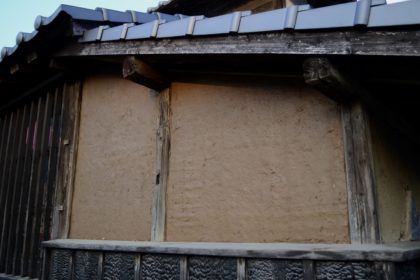
    Japanese clay wall of Old city hall in Yame.
    Just made it. Outside.
    旧八女郡役所の土壁。
    塗りたての状態。外側。

    I ‘ll talk about soil glue.
    Japanese clay wall is made by soil glue.
    It is made base by wood and bamboo.
    Put the clay on both the inside and outside the base.
    Made using abundant resources in the area, and old wall clay can reused.
    土の接着剤の話をしましょう。
    日本の土壁は土の接着剤でできています。
    木と竹で基礎を作り、その基礎の内側と外側の両方から土を塗ります。
    その地域で豊富に手に入る資源が使われ、古い壁土は再利用が可能です。

    Inside.
    壁の内側。
    The wood part is used straw for gluing.
    It’s used local resources and reused old clay of this wall.
    木の部分は接着に藁を使います。
    地元の資源を使い、この壁の古い土も再利用。

    There are many types of clay walls.
    “shikkui”(漆喰しっくい) is one of them.
    It’s white plaster.
    Do you know Mr. Shuhei Hasado?
    He is a famous plasterer in Japan.
    If you are a calligrapher, you’ll be interested in his work.
    Because he has written the title of a TV drama on clay wall.
    I think the clay wall has great potential.
    土壁にはたくさんの種類があり、漆喰はその一つ。
    白壁です。
    挟土秀平氏をご存知ですか?
    日本の有名な左官職人です。
    カリグラファーであれば、彼の作品は非常に興味深いものでしょう。
    テレビドラマの題字を土壁に書いたことがあるからです。
    私は土壁には素晴らしい可能性があると思っています。

    The same building entrance is “shikkui”(漆喰) wall.
    The impression is completely different even on the clay wall.
    同じ建物の入り口は漆喰塗りです。
    土壁でも全く違った印象になります。
    The texture of “shikkui”.
    漆喰の質感。

    There is two reason I think clay wall is good.
    One is don’t making industrial waste.
    Another reason is that we use resources carefully.
    Mr. Komiya shunpei(小宮春平)taught me biodiversity.
    He knows a lot of about especially Ariake Sea.
    Endemic species lives in the Chikugo River, which flows into the Ariake Sea.
    There were a lot of endemic species in the river and sea the past.
    They are become the endangered species now.
    Ariakehimeshirauo” (Neosalanx reganius、有明姫白魚) , a fish that lives in the Chikugo River, is becoming extinct because of the lack of sand in the river.
    The sand was spawner ground for the fish.
    We took all the sand to mix it with the cement used to build the building.
    Faster than the river stores sand…
    And the cement is become a waste, can’t reuse.
    Don’t get me wrong, I like cement buildings.
    I think it looks good.
    I am not asking for a ban on the use of chemical glue or cement.
    If everyone becomes a naturalist now, natural resources will be depleted.
    On the contrary, planting many plants of only one type at a time is environmentally damaging.
    Making big changes at once will have a big impact, to balance.
    We are also affected.
    Think about protecting our lives.
    We should think impact of our actions.

    Liquor shop “Asahiya”(朝日屋酒店).
    Asahiya that also manages this building.
    They chose clay walls to cherish the nature and the atmosphere of the building.
    朝日屋酒店はこの建物の管理もしている。
    彼らは自然と建物の雰囲気に配慮して土壁を採用した。

    土壁を良いと考える理由は二つあります。
    一つは産業廃棄物にならないこと。
    もう一つは、資源を大切に使うためです。
    小宮春平氏は、私に生物多様性を教えてくれました。
    彼は有明海について精通している人物です。
    有明海に注ぎ込む筑後川には固有種が生息しています。
    かつて、筑後川にはたくさんの固有種がいました。
    それらは今、絶滅危惧種になっています。
    筑後川に生息する魚、アリアケヒメシラウオ (有明姫白魚) は川の砂が無くなったために絶滅しかけています。
    砂はシラウオの産卵場所だったのです。
    私たちは建物を立てるためのセメントに混ぜる砂を取り尽くしてしまったのです。
    川に砂が貯まるよりも早く…
    セメントは産業廃棄物になり、再利用できません。
    誤解のないように言うと、私はセメントの建物は好きです。
    むしろ格好良いとさえ思います。
    私は化学糊やセメントの使用禁止を訴えたいわけではありません。
    それどころか、一種類の植物を一度にたくさん植えることだって環境破壊になります。
    もし、今、全ての人がナチュラリストになったとしたら、自然資源は枯渇するでしょう。
    一気に大きな変化をすると大きな影響が出るということです、バランスを取るために。
    私たちもその影響を受けます。
    自分たちの生活を守ることを考えましょう。
    私たちの行動が引き起こす影響を考えた方がいいと思うのです。


  • Plant glue

    Plant glue

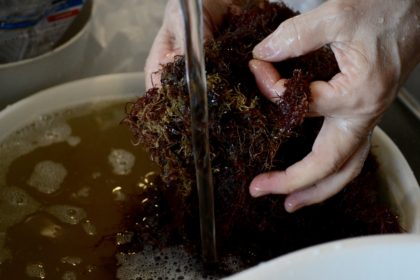
    It’s making “Okyuuto(おきゅうと)”.
    Okyuuto is Fukuoka local dish.
    It’s made by boiling seaweed.
    おきゅうとを作っているところ。
    おきゅうとは福岡の郷土料理。
    おきゅうと草を煮て作ります。

    As you know, the glue is using the action that liquid solidify.
    The restoration of cultural asset uses “funori”.
    It’s a glue made by boiling seaweed like “okyuuto”
    A seaweed glue adhesion power weaker than flour paste.
    Seaweed glue has high solubility in water.
    It takes time so solidify and can be easily dissolved in water even after solidification.
    These property fit for restoration of cultural asset.
    ご存知の通り、接着剤は液体の固化する作用を利用したものです。
    文化財の修復には “ふのり” が使われます。
    ふのりは “おきゅうと” のように海藻を煮て作ります。
    海藻から作られた糊は小麦粉から作られたものより接着力が弱いのです。
    また水によく溶けます。
    固まるまでの時間が長く、固まった後も水に簡単に溶けます。
    これらの特性が文化財の修復には適しています。

    It’s boiling seaweed “okyuutosou”(おきゅうと草)
    Both seaweed glue and paste are harmless to people as they can be taten.
    おきゅうと草を煮ていることろ。
    海藻の糊もでんぷん糊も食用できるほど人体に無害。
    My marbled paper text book.
    This page is water solution recipe.
    This book uses carrageenan.
    マーブル紙の作り方について書かれた本。
    水溶液の配合のページ。
    この本ではカラギーナンを使う。

    Joining things is not the only work of glue.
    Making marbled paper uses carrageenan; glue of seaweed.
    Float the paint on a solution of carrageenan in water.
    物の接合だけが糊の使い道ではありません。
    マーブル紙を作るのにはカラギーナン、海藻の糊を使います。
    カラギーナンの水溶液に絵の具を浮かべるのです。

    It’s “tororoaoi”(Abelmoschus manihot 黄蜀葵).
    Take glue from root.
    黄蜀葵(トロロアオイ)。
    根から糊を取ります。

    Handmade paper making in Japan uses “tororoaoi”(黄蜀葵).
    Glue has function that prevents paper fiber settling in water.
    When the paper completely dry, the glue will not work.
    This can not do chemical glue.
    Japanese bookbinding uses Japanese paper made of natural glue for protect the work.
    Because the remaining cultural asset prove the safety of the glue.
    日本の紙漉きには黄蜀葵(トロロアオイ)が使われます。
    紙の繊維が水に沈まないようにするための糊です。
    紙が完全に乾くと、糊の作用は消えます。
    これは化学合成糊にはできません。
    日本の表装では、作品の保護のために天然糊で漉かれた和紙が用いられます。
    現存する文化財が糊の安全性を証明しているからです。

    Tororoaoi glue is called “neri”.
    One kind of okra.
    黄蜀葵の糊はネリと呼ばれる。
    オクラの一種です。

    I use chemical glue for bookbinding now.
    All bookbinding text book says biding method uses chemical glue.
    I wash the brush I used for the chemical glue.
    I drain waste water finished making marbled paper.
    We know it is no good.
    I’m looking for a better binding method and material.
    So that we can continue to make books.
    今、私は化学合成糊を使って製本しています。
    どの製本の教科書にも化学合成糊を使う方法しか紹介されていません。
    化学合成糊に使った筆を洗い、
    マーブル紙作りに使った水溶液を流すわけです。
    良くないことだとわかっています。
    より良い製本の方法や原材料を探しているところです。
    これからも本作りをしていくためにも。