タグ: kintsugi

  • To my dear overseas friends who love Japan.

    To my dear overseas friends who love Japan.

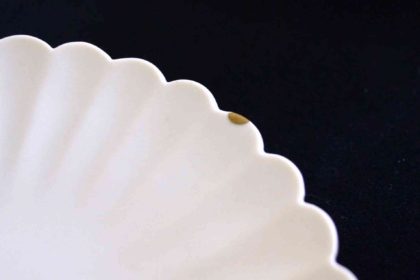
    This is Tomoko Komatsu’s kintsugi work.
    こちらは小松知子氏の金継ぎ作品。

    I started writing in English because I wanted to tell my friend’s artists about Kintsugi.
    But I am struggling to tell you.
    The material of lacquer and Kintsugi were deeper than I had imagined.
    Tomoko Komatsu and her classroom “Naosu, Tsukuru.” taught me about it.

    友人のアーティスト達に金継ぎを伝えたくて英語で書き始めました。
    しかし、伝えるのに苦心しています。
    漆という素材と金継ぎは想像以上に奥深いものだったからです。
    そのことを私に教えてくれたのが、小松知子氏であり、
    彼女が運営する金継ぎ教室「なおす、つくる。」です。

    This is also Tomoko Komatsu’s kintsugi work.
    こちらも小松知子氏の金継ぎ。

    Before talking about the Kintsugi class “Naosu, Tsukuru.”,
    I would like to tell you about the situation of my Kintsugi.
    You should get a glimpse of what Kintsugi actually does.
    Later in this blog, you’ll find sites
    where you can buy Kintsugi tools, materials, and her Kintsugi works.
    If you want it quickly, skip the first half.

    金継ぎ教室「なおす、つくる。」の話の前に
    私の金継ぎ状況をお伝えしますね。
    金継ぎとは実際にどのようなことをするのかが、
    垣間見れるかと思います。
    このブログの後半では、金継ぎの道具、材料、小松氏の金継ぎ作品を
    購入できるサイトを紹介しています。
    それが気になって待てない方は、どうぞ前半を飛ばしてくださいね。

    These two glassware are mine.
    この二つのガラス製品は私のものです。

    This is the third round of Kintsugi.
    The third time repair is the glassware.
    A thing that was split in half and a crack.
    Handmade glass and industrial glass.
    Two different properties glassware.
    The repair process and the materials used are also different.

    今度で3巡目の金継ぎです。
    3回目はガラス製品の修理を。
    真っ二つに割れた物とヒビ。
    手作りのガラスと工業製品のガラス。
    二つの性質の異なるガラス製品です。
    補修の行程も使用する材料も異なります。

    This is the first time.
    Repairing small chips.
    This is the photo the last stage.
    The left side of the three places is after polishing the finish.
    You can see that the way it shines is different from the other two places.
    Use sea bream teeth to brush.
    On the plate is the tool made by the teacher.
    Komatsu sometimes holds workshops to make tools.
    Tool making is very attractive to artists and craftsmen.

    これが初めての金継ぎ。
    小さな欠けの補修。
    最終段階の写真です。
    三箇所のうちの左側が仕上げ磨きの後。
    他の二箇所とは光り方が違うのがわかるでしょう。
    磨くのには鯛の歯を使います。
    皿の上に乗っているのが先生お手製のその道具です。
    小松氏は、道具制作のワークショップを時々開催しています。
    道具作りはアーティストや工芸家にとって非常に魅力的です。

    This is the time to finish the second round.
    It was a crack repair.
    I wanted to make the line as delicate as possible.
    So I worked very carefully.
    Repair it so that it fits in the original shape.
    However, it does not hide the scars.
    Kintsugi is designed to harmonize it.

    これは2巡目の最後です。
    ヒビの補修。
    できるだけ繊細な線にしたいと思いました。
    そのために、とても丁寧に作業をしました。
    元の形に馴染むように補修します。
    しかし、傷跡は隠しません。
    それを調和するようにデザインするのが金継ぎです。

    The introduction has become longer.
    Today, I would like to talk about the Kintsugi class I am learning “Naosu, Tsukuru”.
    “Naosu, Tsukuru” is a Japanese word that means to”repair, create.”.
    Kintsugi is newly created by repairing it.
    For that reason, owner Tomoko Komatsu says that repairs come first and creation comes later.
    And moreover here you can learn about work using lacquer other than Kintsugi.

    前置きが長くなりました。
    今日は、私が通っている金継ぎ教室「なおす、つくる」について話したいと思います。
    「なおす、つくる」とは、「補修(リペア)、(創造)クリエイト」という意味の日本語です。
    金継ぎは、なおすことで、新たにつくります。
    ですから、なおすが先、つくるが後、なのだと、オーナーの小松知子氏は言います。
    更に、ここでは金継ぎ以外の漆作品を教わることができます。

    For example this is Raden.
    It’s a decoration with shell.
    I am taking pictures of the work of other students.
    Starting with creating a design, laying the foundation and copying the design.
    Everything is delicate work.

    例えば、これは螺鈿です。
    貝を貼る装飾のことを言います。
    他の方の作業を撮らせてもらいました。
    デザインを起こすことに始まり、土台を作り、デザインを写し取ります。
    どれもこれも、細やかな作業です。

    Some of the students have a tea ceremony instructor.
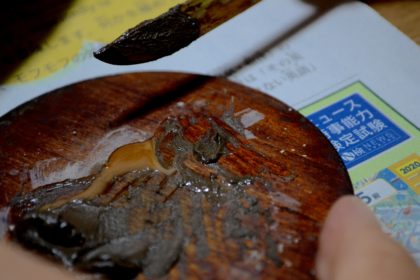
    This photo shows a spoon called “Chashaku” used in the tea ceremony, which is lacquered.


    教室に通う生徒の中には茶道の師範もいらっしゃいます。
    これは茶道で使う茶杓というスプーンに漆を塗っているところ。

    This is a technique called “Makie” that draws a picture with lacquer
    and decorates it with precious metal powder.
    It is decorated on a plate for sweets in the tea ceremony.
    In this way, Komatsu’s class accepts lacquer crafts other than Kintsugi.

    これは、漆で絵を描き、貴金属の粉で装飾する蒔絵と呼ばれる技法です。
    茶道のお茶会でお菓子を盛る皿に装飾しています。
    このように、小松氏の教室では、金継ぎ以外の漆の工芸も受け入れています。

    A color sample of lacquer made by Komatsu.
    Lacquer can be used not only as an adhesive but also as a paint.
    小松氏が作っている漆の色見本。
    漆は糊料だけでなく塗料にもなります。
    These are pictures of using a special tool for lacquer crafts.
    これらは漆芸専用の道具を使っている様子の写真です。


    Moreover, I would like to introduce a company called “Taketobo” to my friends.
    There, Japanese craft products are introduced in English and sold outside Japan.
    And, Goen is a sales site operated by Taketobo.
    You can also buy the tools and materials needed for kintsugi,
    as well as the works that Komatsu has kintsugi.
    There is also a detailed explanation about Komatsu and Kintsugi on the site.

    To my dear overseas friends who love Japan.
    When the time comes when we can come and go,
    and you want to experience Japanese lacquer crafts and Kintsugi,
    remember the Kintsugi class “Naosu, Tsukuru.”, Tomoko Komatsu, and “Taketonbo”.
    It will surely inspire your creation.

    さらに、「竹とんぼ」という会社をご紹介したいと思います。
    こちらのサイトでは、日本の工芸製品について英語で紹介し、
    日本国外へ販売も行なっているのです。
    そして、「竹とんぼ」が運営している販売サイトが「ご縁」です。
    金継ぎに必要な道具や材料、小松氏の金継ぎ作品も買うことができます。
    サイト内には小松氏と金継ぎについての詳しい説明もあります。

    日本を愛してくれている、親愛なる海外の友人達へ。
    互いに行き来できる時がきて、日本の漆芸と金継ぎを体験したくなったら、
    金継ぎ教室「なおす、つくる。」と小松知子氏、
    そして「竹とんぼ」を思い出してくださいね。
    きっと、あなたの創作に刺激を与えてくれるはずです。

    A paper bag containing silver powder used for kintsugi.
    金継ぎに使う銀粉が入っている紙袋。
  • The glue work of  “Urushi”

    The glue work of “Urushi”

    It is making of “sabi”.
    “sabi” is glue and filling for “kintsugi”
    錆(さび)を作っているところ。
    錆は金継ぎの接着剤であり、充填材です。

    I’ll want to tell about “urushi”.
    Urushi is a traditional material of Japan.
    It have been using the East Asia as well as Japan.
    It is resin of urushi tree.
    The traditional “kintsugi” is used glue of urushi.
    I have an interesting in urushi, the reason is glue!!
    Glue is indispensable for bookbinding.

    My book with missing pages.
    The glue didn’t work.
    落丁本。糊が効かなくなっている。

    We use many kind of glue in the life.
    For example, glue is made from skin and bone of animals.
    Paste is made from starch by plants.
    A building wall paster is made from ground.
    Synthetic glue, and more more…

    These are my usually using glues for bookbinding.
    From the left PVAC, PVAL, and paste.
    私が通常製本に使っている糊。
    左から酢酸ビニル樹脂、ポリビニルアルコール、でんぷん糊。

    Urushi is different from any glue I have ever used.
    Liquid urushi can be mixed with both water and oil.
    But neither water nor oil can’t melt solidified urushi,
    moisture is needed to harden urushi.

    My cracked cup.
    I glued crack with sabi, urushi glue.
    ひびの入ったカップを錆(漆の接着剤)を塗ったところ。

    I don’t want to use not safe glue for tableware.
    Urushi is a safe natural glue.
    Solid urushi can withstand acidity, alkali, heat, and alcohol.
    (But be careful using, break out in a rash from liquid urushi.)
    The best things of all “urushi” is beautiful.
    It is shiny, hard but soft and has a unique textre.

    Before putting on the metal, the stage of the base red urushi.
    Kintsugi has many steps.
    金属粉を蒔く前、下地の赤漆の段階。
    金継ぎにはいくつもの工程がある。


    There is also a kintsugi that is finished only with urushi without using metal.
    As above, urushi is very interesting material.
    Do you understand a little reason why I want to talk about kintsugi?
    ( Oh! I’m sorry, I mistaken.
    Could I tell you reason why I want talk about kintsugi? )

    漆の話。
    漆は日本古来の材料です。
    日本だけでなく、東洋で使われてきました。
    漆の木から採れる樹脂です。
    伝統的な金継ぎは漆を接着剤として使用します。
    接着剤!!とても興味深い!
    製本に糊は欠かせませんから。

    私たちは生活の中で様々な種類の糊を使っています。
    例えば、膠(にかわ)は動物の皮や骨でできた接着剤です。
    やまと糊は植物のでんぷんでできています。
    建物の壁に使う漆喰は土の接着剤です。
    化学合成糊もありますし、他にももっと…

    漆は私が今まで使ってきたどの糊とも違っていました。
    液状の漆は、水とも油とも混ぜることができます。
    ですが、水も油も固化した漆を溶かすことはできず、
    漆が固まるには湿度が必要なのです。

    私は安全ではない接着剤を食器に使いたくありません。
    漆は安全な天然の接着剤で、
    固まった漆は、酸にもアルカリにも、高温、アルコールにも耐性があります。
    (しかし、固まってない漆はかぶれてしまうから気をつけて!!)
    何と言っても、漆は美しい。
    光沢があり、硬いのに柔らかく、独特の質感を持っています。
    金継ぎには、金属を使わずに漆だけで仕上げるものもあります。
    以上のように、漆は非常に興味深い素材です。
    私が金継ぎについて語りたい理由が少しは伝わったでしょうか?
    (すみません。言い方を間違えました。
    金継ぎについて語りたい理由を、私は伝えることができたでしょうか? )